


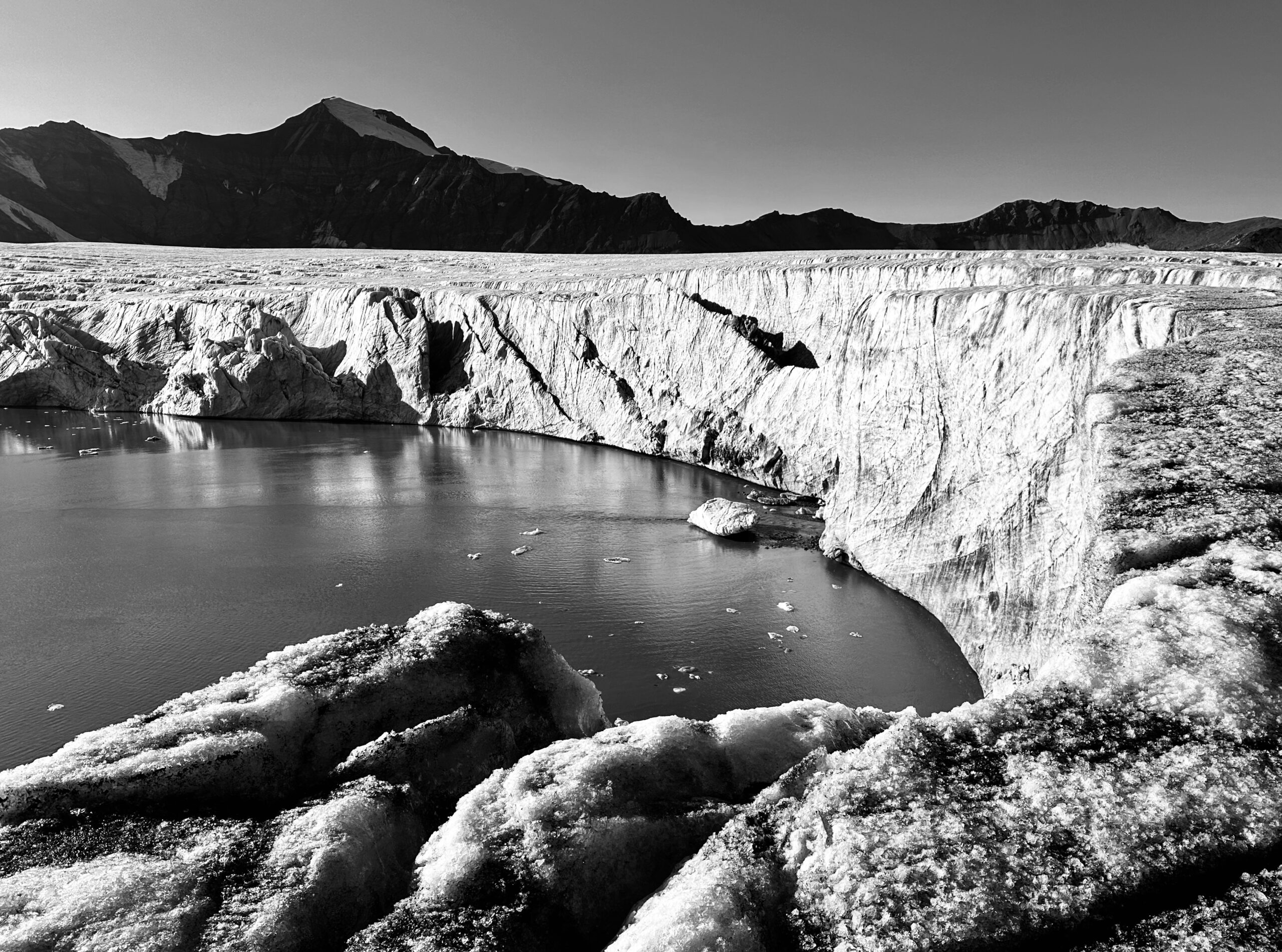
The White Arctic, as it turns out, is not so white after all. At least not all year round. In August, in the vicinity of the town of Longyearbyen, you will look in vain for snow. Summer has discovered the bare hills of Svalbard, at first glance boring and grey. However, if we look closer, we will discover the whole palette of colours and charm of the North. The rocky coasts of the archipelago are occasionally crossed by glacier tongues. Glaciers, like predators, give the impression that they want to seize and cover the entire land. The truth is, however, completely different. The glaciers are disappearing. Masses of ice are retreating inland, revealing rocky valleys and previously hidden beaches. What’s more, pieces of ice break off from the glaciers and fall into the water, then we say that the glaciers are calving. This is accompanied by a rather powerful roar. I saw, I heard, I confirm. And this is how icebergs are formed, drifting for so long that they finally change their state of matter.
The Arctic is changing. It is supposedly more accessible, but still wild. We are no longer afraid of harsh winters, which are slowly fading into oblivion. The increasingly longer summer and record high temperatures force us to ask uncomfortable questions. Where are we heading? Who will survive? Who will lose and who will gain? One thing is certain, we are witnessing interesting changes. Changes for the better or for the worse? It is not for me to judge, time will tell.