


Long, long ago, when all the continents were fused into a single landmass called Pangaea, Svalbard was located roughly around the Tropic of Cancer. Over time, the archipelago embarked on a long and fascinating journey northward, bringing it to where it is today, beyond the Arctic Circle. Nowadays, as we gaze at Svalbard’s rugged, rocky coastlines, it’s hard to imagine that trees once grew here. In fact, dinosaurs roamed this land. Of course, that was in the distant past. Today, glaciers cover 60% of the archipelago, and trees have long since disappeared.
The polar climate is far from pleasant, characterized by low temperatures and minimal precipitation. Svalbard is classified as a desert, although it rains fairly often around Longyearbyen. Despite such inhospitable conditions, an astonishing number of plant and animal species have made their home here. The will to fight and survive in every living organism is truly remarkable. It’s amazing where you can encounter the inhabitants of the North.
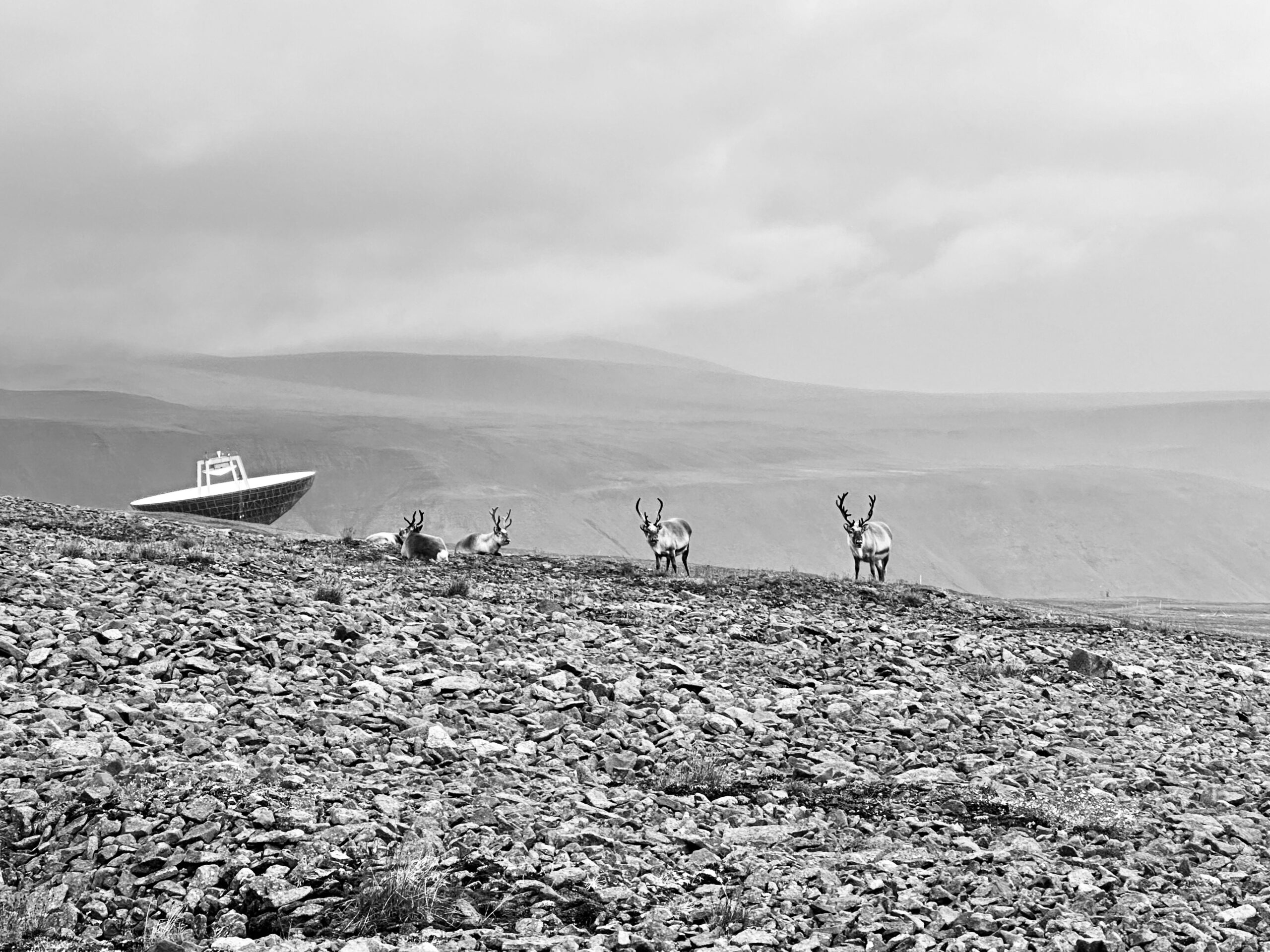
Take, for example, a plateau near the Foxfonna glacier. Just when I think there’s no one around, five reindeer suddenly emerge from the dense fog. At first, the confused animals carefully observe us, but then they nonchalantly continue their lunch. I have no idea how they find food here; the plateau is nothing but a pile of rocks. But winter is coming soon, so they devote all their energy to finding sustenance. They need to eat a lot to store up a significant amount of fat.
While the reindeer casually roam around in search of treats, I struggle to keep my balance and battle the howling wind—not to mention the fact that I’m bundled up in several layers of clothing. Wool and down are my essential defenses against the cold. Meanwhile, the animals seem entirely unfazed by the harsh conditions.